My Favorite Things to Do in Joshua Tree National Park
- RV Destinations
- get inspired
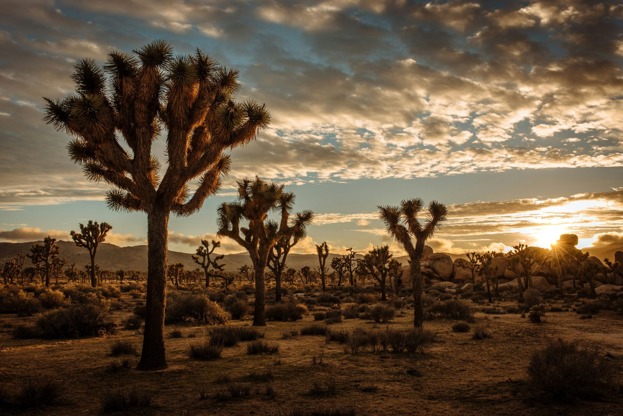
I went to college in southern Arizona, just a five-hour drive from Joshua Tree National Park. Road-tripping is a deeply ingrained part of Western culture out there, especially among budget-minded college students, so I made the 290-mile trek more times than I can count. Back then, it meant pooling cash with my sorority sisters, taking a few obligatory selfies, sleeping in a falling-apart tent, and heading home.
As I've gotten older, my trips have become better planned and far more efficient. I've gone from just arriving at Joshua Tree to actually exploring it, and there's a significant difference between the two. Whether you're driving in from Palm Springs, making the trip up from San Diego, or rolling in from across Southern California in a rented RV, this park rewards anyone willing to slow down and actually look around.
After more visits than I can keep track of, I've finally put together the complete guide to things to do in Joshua Tree National Park, from the iconic stops every first-timer needs to see, to the hidden corners that most visitors drive right past.
Why Joshua Tree National Park Belongs on Your Road Trip Bucket List
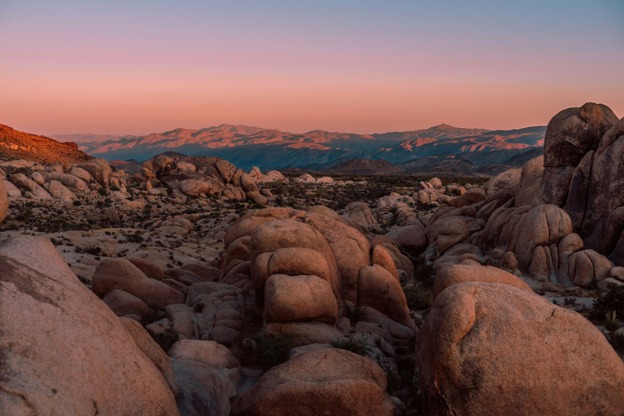
Joshua Tree has always held a special place in my heart, and the reason is simple: there's truly nothing like it. You're clearly in the desert, but expansive mountains stretch out all around you. The iconic Joshua trees are scattered amongst unusual rock formations, all under a clear and colorful desert sky, making the landscape look even more otherworldly than photographs suggest.
What makes it especially unique is that Joshua Tree sits at the convergence of two deserts, the Mojave and the Colorado, each bringing its own distinct ecosystem to the park. The higher, wetter Mojave side is where you'll find the namesake Joshua trees and dramatic granite boulder piles. Drop down into the Colorado Desert side and the landscape shifts entirely, giving way to ocotillo, cholla cactus, and a stark, open basin that feels like the edge of the earth.
For road trippers specifically, Joshua Tree is close to ideal. It's within a few hours of Los Angeles, San Diego, and Palm Springs, making it an easy add to any Southwest road trip itinerary. The park is open 24 hours a day, 365 days a year, so you can arrive on your own schedule, a real advantage when you're traveling by RV and not beholden to hotel check-in times. And with quite a bit of ground to cover inside the park, there's enough here to fill two or three days without ever feeling like you've run out of things to see.
Truthfully, it all feels more than just a little magical. It's magnetic; there's something undeniable yet inexplicable about Joshua Tree that pulls visitors back again and again.
What to Know Before You Visit Joshua Tree
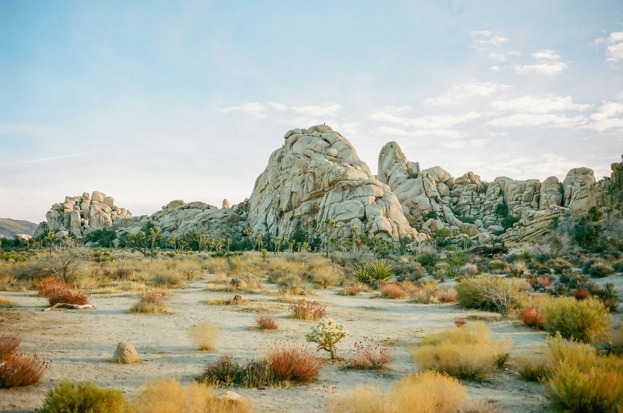
Planning ahead makes a significant difference at Joshua Tree National Park. Unlike many destinations in Southern California, the park has very limited infrastructure inside its boundaries, which can catch first-time visitors off guard. Here's what you need to know before you go.
The Basics
|
Hours |
Open 24 hours a day, 7 days a week, 365 days a year |
|
Entrance Fee |
$35 per vehicle (7-day pass) |
|
America the Beautiful Pass |
$80/year — worth it if you're visiting 3+ national parks |
|
Cell Service |
Very limited inside the park — download offline maps before you enter |
|
Gas |
No gas stations inside the park — fill up before you enter |
|
Food & Water |
No restaurants inside the park, and no water available in the park interior — bring everything you need |
|
Nearest Airport |
Palm Springs International Airport (~1 hour from the west entrance) |
Campsite Reservations
If you're camping and traveling by RV, reservations are essential. Nearly 85% of the 500+ campsites in the park are reservation-only, bookable up to six months in advance on recreation.gov. First-come, first-serve sites fill up fast, especially on weekends between October and May and during spring break season. Don't assume you'll find a spot when you arrive.
RV-Specific Tips
-
Black Rock and Cottonwood campgrounds have hookups and are the most RV-friendly options in the park
-
Jumbo Rocks Campground is a favorite for its dramatic boulder scenery, but has no hookups
-
Large rigs should check size restrictions for individual campgrounds before booking, as some sites have length limits
-
The west entrance off Highway 62 near the town of Joshua Tree is the most accessible entry point for larger vehicles
-
Cell reception is extremely limited once inside, so download your maps, campground confirmations, and any trail info before you leave the main road
What to Bring
-
Plenty of water (at least one gallon per person per day)
-
Layers — temperatures can swing dramatically between day and night, so bring layers regardless of the season
-
Sunscreen, a hat, and sun-protective clothing
-
Snacks and meals, as there are no restaurants inside the park
-
A paper map or a downloaded offline map as a backup
Best Time of Year to Explore the Park
Timing your visit to Joshua Tree National Park can make or break the experience. Here's a quick breakdown of what to expect each season:
|
Season |
Temps (Day) |
Temps (Night) |
What to Expect |
|
Spring (Mar-May) |
70-85°F |
50°F |
Best weather, wildflower blooms possible, most crowded |
|
Summer (Jun-Aug) |
100°F+ |
75°F+ |
Extreme heat, not recommended for daytime activities in the park |
|
Fall (Sep-Nov) |
70-85°F |
50°F |
Excellent weather, fewer crowds than spring |
|
Winter (Dec-Feb) |
60°F |
Below freezing |
Beautiful and quiet, cold nights, occasional snow at elevation |
Spring
Spring is peak season at Joshua Tree for good reason. Temperatures are comfortable, the light is gorgeous, and if the winter rains cooperated, you may be pleasantly surprised by wildflower blooms scattered across the desert floor. The best odds for flowers are late February through April. The trade-off is crowds; the park gets very busy on weekends from October through May, and spring break season (mid-March through mid-April) brings some of the heaviest traffic of the year. Arrive early to find parking, especially at popular trailheads like Hidden Valley and Skull Rock.
Summer
Summer is the one season when you need to be genuinely cautious. Daytime highs regularly exceed 100°F, and the combination of heat, dry air, and elevation gain on trails can be dangerous. If you visit in summer, start early and be off the trails before 10 am. The park is far quieter, but the heat is not something to underestimate.
Fall
Fall is arguably the best-kept secret for visiting Joshua Tree. Temperatures mirror spring without the crowds, cell service in nearby towns is less congested, and the golden light of October and November makes for spectacular photography throughout the park. If flexibility is an option, fall is the move.
Winter
Winter at Joshua Tree is quieter and surprisingly beautiful. Daytime temps hover around 60°F, but nights drop to near or below freezing, so bring layers and make sure your RV is set up for cold-weather camping. The occasional dusting of snow on the rock formations and Joshua trees is a sight very few visitors ever get to see.
A Note on Stargazing Timing
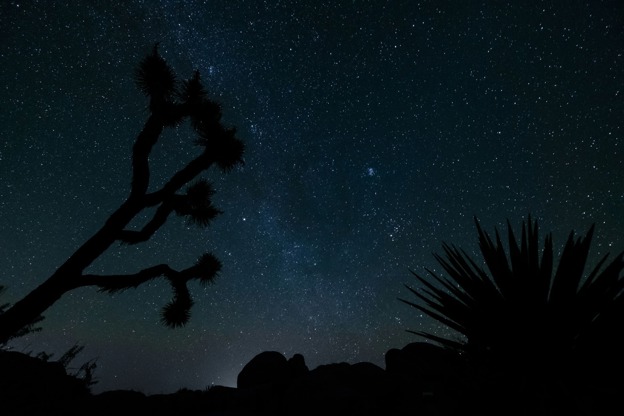
If stargazing is a priority, plan your visit around the new moon. Without moonlight washing out the night sky, the Milky Way is visible to the naked eye from almost anywhere in the park.
Best Things to Do in Joshua Tree National Park
Hike the Hidden Valley Nature Trail
For first-time visitors, the Hidden Valley Nature Trail is the single best introduction to what makes Joshua Tree so special. This one-mile loop winds through a natural rock enclosure that was rumored to have been used by cattle rustlers in the 1800s, and the scenery inside feels almost secretive, like you've stumbled into a hidden world.
The trail is easy enough for most fitness levels, with only about 100 feet of elevation gain and a clear, well-marked path throughout. Along the way, you'll weave between massive boulder piles, stands of Joshua trees, and scrubby desert vegetation, with plenty of opportunities to scramble up rocks for a better view. The Hidden Valley Campground sits right next to the trailhead, making it a convenient morning activity if you're camping nearby.
A few tips for getting the most out of this hike:
-
Arrive early, especially on weekends. The Hidden Valley parking lot fills up fast and there is no overflow parking nearby
-
The trail takes most people 30 to 45 minutes at a leisurely pace
-
Look for rock climbers on the boulder faces surrounding the valley. Hidden Valley is one of the most popular climbing areas in the park
-
Combine it with the adjacent Barker Dam trail for a fuller morning of hiking without adding much difficulty
Take on the Ryan Mountain Hike
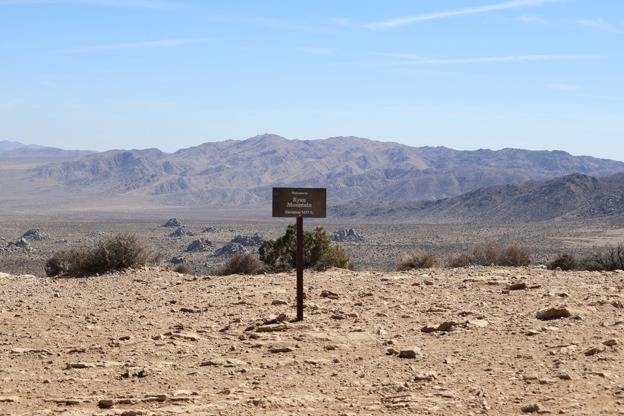
If you want the best panoramic views in the park and you're willing to work for them, the Ryan Mountain hike delivers. This three-mile out-and-back trail climbs 1,050 feet to the summit of Ryan Mountain, where you're rewarded with sweeping views across the park in every direction, including Pinto Basin, the Little San Bernardino Mountains, and on clear days, all the way to Palm Springs and the Coachella Valley below.
It's listed as difficult due to the elevation gain, but the trail itself is well-maintained and straightforward. Here's what to know before you go:
|
Distance |
3 miles out and back |
|
Elevation Gain |
1,050 feet |
|
Difficulty |
Moderate to difficult |
|
Time |
Allow 2 to 3 hours |
|
Trailhead |
Located near Sheep Pass, roughly in the center of the park |
The summit is one of the best spots in the park for photography, particularly in the early morning when the light is soft, and the desert floor below is still in shadow. Start early to beat both the heat and the crowds, and bring more water than you think you need.
Discover Cap Rock and the Boulder Formations
Joshua Tree's rock formations are arguably just as iconic as the trees themselves, and Cap Rock is one of the best places in the park to experience them up close. Named for a distinctive boulder that sits perched on top of a larger rock formation like a cap, this area sits near the center of the park and is one of the most accessible stops for visitors of all ages and ability levels.
The Cap Rock Nature Trail is a 0.4-mile loop with virtually no elevation gain, making it one of the easiest walks in the park. But don't let the short distance fool you; the scenery is incredible. The trail winds through a maze of unique rock formations, with massive stacks of monzogranite rising up on all sides and Joshua trees filling the gaps between them. It's a great spot to slow down, wander, and appreciate the geology that makes this park unlike anywhere else in Southern California.
A few things worth knowing about Cap Rock:
-
The parking lot here is large and tends to be less congested than Hidden Valley, making it a good option if you're arriving later in the day
-
The area is a popular rock climbing destination, so don't be surprised to see climbers scaling the faces around the trail
-
Cap Rock is also a designated stargazing area, with the open sky above the boulder formations offering an excellent view of the night sky after dark
-
It was also the site where musician Gram Parsons passed away in 1973, giving it a quiet cultural significance that many visitors find meaningful
Find the Heart Rock
Heart Rock is one of Joshua Tree's most charming and lesser-known stops, and finding it feels like a small reward in itself. Tucked within the boulder formations near Cap Rock, it's exactly what it sounds like: a naturally occurring heart-shaped hole eroded through a boulder over thousands of years of wind and water.
It doesn't require a formal hike to reach, but finding it does take a little exploring among the rocks, which is half the fun. It's become a popular spot for photos, particularly around sunrise and sunset when the light passes directly through the opening and creates a striking visual effect. If you're in the Cap Rock area anyway, it's absolutely worth the small detour to track it down.
Tips for visiting Heart Rock:
-
There is no official trail or signage leading to Heart Rock, so look up directions or a map pin before you arrive
-
Early morning offers the best light for photography
-
It pairs easily with the Cap Rock Nature Trail since the two are in the same area -- plan to do both in the same stop
Walk Through the Wall Street Mill
The Wall Street Mill is one of the most fascinating and undervisited historical sites in Joshua Tree National Park, and it makes for a wonderful stop if you're looking to add a little history to your visit. Built in the 1930s by Bill Keys, the mill was used to process gold ore from nearby mines and stands today as one of the best-preserved examples of early 20th-century desert industry in the region.
The trail to the Wall Street Mill is an easy 1.8-mile out-and-back walk with minimal elevation gain, making it accessible for most visitors. Along the way, you'll pass the ruins of an old water tank, a rusted Model T Ford that has sat in the desert for decades, and the mill itself, which still has much of its original equipment intact. It's a genuinely surprising find in the middle of the park, and one that tends to leave visitors pleasantly surprised by how much history is hiding out here in the desert.
Here's what to know before you visit:
|
Distance |
1.8 miles out and back |
|
Elevation Gain |
Minimal |
|
Difficulty |
Easy |
|
Trailhead |
Located near the Barker Dam parking area, close to the west entrance of the park |
-
The trail is not as heavily trafficked as popular hikes like Hidden Valley or Ryan Mountain, so you're likely to have a quieter experience here -
Combine it with the Barker Dam trail nearby for a half day of easy exploring in the same area
-
Bring a hat and plenty of water, as there is no shade along the trail
Visit the Cholla Cactus Garden at Golden Hour
Of all the stops in Joshua Tree National Park, the Cholla Cactus Garden at golden hour might be the most visually spectacular. Located along Pinto Basin Road in the eastern section of the park, this 10-acre stretch of desert is home to a dense concentration of teddy bear cholla cactus that seems to glow when backlit by the setting sun. It's the kind of scene that stops you in your tracks.
The trail through the garden is a flat, 0.25-mile loop with almost no elevation gain, so it's one of the most accessible stops in the park. But the real magic here is about timing. Arriving one hour before sunset gives you the full golden hour experience, when the low angle of the sun lights up the silver spines of the cholla and turns the entire garden into something that looks almost otherworldly.
A few important notes for this stop:
-
The cholla cactus earns its nickname of "jumping cactus" because its barbed spines detach incredibly easily and attach to skin, clothing, and shoes with almost no contact. Stay on the trail and watch your step carefully
-
Keep children and pets especially close here. The spines are extremely difficult to remove and very painful
-
The Cholla Cactus Garden sits roughly in the middle of Pinto Basin Road, which runs through the Colorado Desert side of the park. It's worth combining this stop with a drive through Pinto Basin for a broader sense of this quieter, less-visited section of the park
-
Arrive early enough to find parking before the lot fills up at sunset
Catch Sunrise or Sunset at Keys View
Keys View is one of those stops that genuinely earns its reputation. Perched on the ridge of the Little San Bernardino Mountains at just over 5,000 feet of elevation, this panoramic overlook delivers some of the most expansive views in all of Southern California. On a clear day, you can see Palm Springs and the sprawling Coachella Valley below, the shimmer of the Salton Sea in the distance, and the unmistakable line of the San Andreas Fault cutting across the desert floor.
The drive up to Keys View takes about 25 minutes from the west entrance, and the road is paved all the way to the top, making it one of the most accessible viewpoints in the park for all vehicle types, including RVs, though larger rigs should check length restrictions before making the drive up. From the parking lot, it's a short, flat walk to the overlook itself.
Here's what to know about visiting Keys View:
-
Sunrise offers stunning light on the mountains and valley below, with fewer crowds than sunset
-
Sunset is the most popular time to visit. Arrive early to find parking as the lot fills up quickly in the late afternoon, particularly on weekends
-
On exceptionally clear days in winter, you can see the snow-capped peaks of the San Bernardino Mountains on the horizon
-
The elevation means it can be significantly cooler and windier up top than elsewhere in the park, so bring layers even on warm days
-
Keys View sits along the same road as several other attractions, so it pairs well with a stop at Cap Rock or Heart Rock on the same drive
Go Rock Climbing
Joshua Tree National Park is one of the premier rock climbing destinations in the world, and even if you've never touched a climbing wall in your life, it's worth knowing about. The park has over 8,000 climbing routes and 2,000 boulder problems spread across its iconic granite formations, drawing climbers from across the globe every year.
For experienced climbers, the park is a bucket list destination. The rock formations here offer everything from beginner-friendly bouldering to challenging multi-pitch routes, and the unique monzogranite provides excellent friction for crack climbing techniques. Some of the most popular climbing areas include Hidden Valley Campground, Cap Rock, and the Jumbo Rocks Campground area.
For beginners or curious visitors, guided climbing experiences are a fantastic way to try it out:
-
Joshua Tree Rock Climbing School offers lessons for all skill levels
-
Joshua Tree Guides provides guided climbs and instruction for beginners through advanced climbers
-
Cliffhanger Guides and Stone Adventures are also permitted to guide inside the park
A few things to keep in mind:
-
Always check in at the Joshua Tree Visitor Center for current conditions and any route closures before heading out
-
Climbers must stay on established routes and avoid disturbing desert vegetation
-
The Hidden Valley Campground area is a great place to watch experienced climbers, even if you're not participating, and makes for an entertaining little break from hiking
Stargaze Under an International Dark Sky
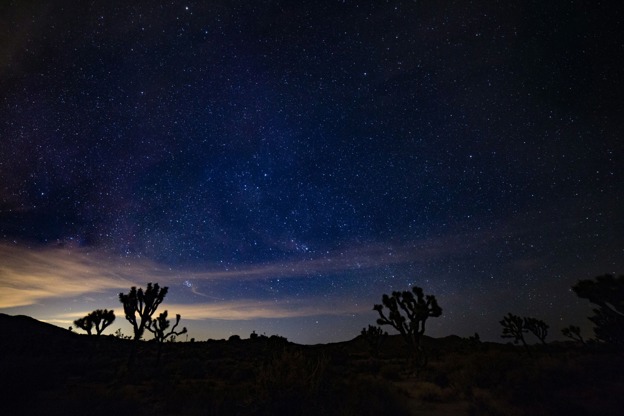
Joshua Tree National Park holds the designation of an International Dark Sky Park, which means its night sky is formally protected from light pollution and consistently ranks among the best stargazing in the country. After a full day of exploring, staying up to watch the stars emerge over the desert is an experience that is genuinely hard to put into words.
The Milky Way is visible to the naked eye from almost anywhere in the park on a clear night away from the new moon, but there are four designated stargazing parking areas that offer particularly good open views of the night sky:
-
Quail Springs
-
Cap Rock
-
Ryan Mountain
-
Hidden Valley
Tips for making the most of your stargazing experience:
-
Plan your visit around the new moon for the darkest skies and the best chance of seeing the Milky Way clearly
-
Bring layers. Night temperatures drop significantly in the desert regardless of how warm the day was
-
Use a red light flashlight rather than a white light to preserve your night vision
-
Check the NPS website or stop at the Joshua Tree Visitor Center for ranger-led night sky programs, which are offered periodically throughout the year
-
If you're camping in your RV, simply stepping outside your door after dark puts you right in the middle of one of the best light shows on earth
Hidden Gems and Scenic Drives in the Tree National Park Interior
Joshua Tree rewards visitors who venture beyond the popular hikes and well-known overlooks. Here are a few lesser-known stops worth adding to your itinerary:
Cottonwood Spring Oasis: Located near the south entrance of the park near the Cottonwood Visitor Center, this natural oasis is one of Joshua Tree's best-kept secrets. A short, easy walk brings you to a shaded grove of fan palms fed by an underground spring, and the contrast with the surrounding desert is striking. It's also one of the best birding spots in the park, with a wide variety of species drawn to the water and shade year-round.
Geology Tour Road: This 18-mile backcountry route takes you through some of the most dramatic and varied desert scenery in the park, including ancient lake beds, volcanic rock, and sweeping valley views. The first section is accessible by standard vehicles, but a high-clearance 4WD vehicle is recommended for the full route. It's a great option for a slower-paced day when you'd rather explore from the comfort of your vehicle.
Oasis of Mara: Located at the north entrance near Twentynine Palms, this flat 0.5-mile loop at the park's main visitor center is one of the most overlooked easy walks in the park. It tells the story of how both native people and wildlife have depended on this desert oasis for thousands of years, and it is a great first stop if you're entering from the north entrance.
Birding in the Park: Joshua Tree is a surprisingly rich destination for birders, with year-round residents and seasonal visitors passing through during migration. Some of the best spots include Barker Dam, the Oasis of Mara, and Cottonwood Spring. Keep an eye out for roadrunners, Gambel's quail, and prairie falcons, among many others.
Step Back in Time at Pioneer Town
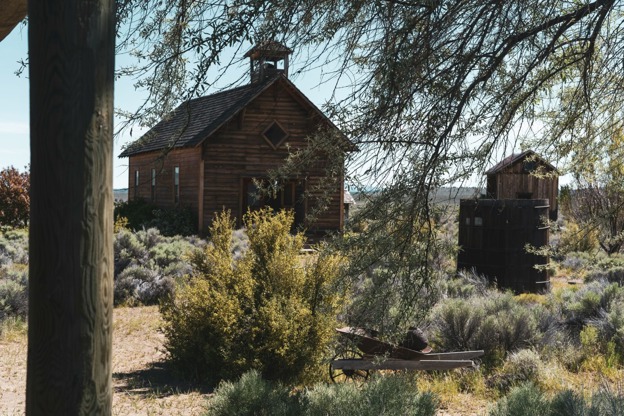
No visit to the Joshua Tree area is complete without a trip to Pioneertown, a small community about 15 minutes north of the town of Joshua Tree that feels like it was lifted straight out of the 1880s. That's because in many ways it was. Pioneertown was built in 1946 as a working movie set for Western films, and its main street, Mane Street, still looks exactly as it did when cowboys were riding through for the cameras.
Today the buildings that once served as film backdrops house a handful of unique shops, local artisans, and small businesses that give the area a quirky, creative energy that fits perfectly with the broader Joshua Tree area vibe. It's worth a wander on its own, but the real reason most people make the drive out is Pappy and Harriet's.
Pappy and Harriet's Pioneertown Palace is a legendary desert institution. Part BBQ restaurant, part honky-tonk music venue, it draws visitors from across Southern California and beyond for its smoky, generous portions and its nightly live music shows that have featured everyone from local acts to internationally known musicians. Booking a table in advance is strongly recommended, particularly on weekends.
A few tips for visiting Pioneertown:
-
Many of the shops and businesses in Pioneertown keep limited hours earlier in the week, so aim to visit Wednesday through Sunday for the best experience
-
The drive from Joshua Tree National Park takes about 15 to 20 minutes and is a scenic and easy road suitable for most vehicles
-
Pioneertown makes a great evening outing after a full day in the park, giving you something to look forward to after the trails
How Long to Stay and How to Plan Your Visit
One of the most common questions first-time visitors ask is how much time to set aside for Joshua Tree. The honest answer is that one day is enough to hit the highlights, but two or more days is where the park really opens up.
One Day in Joshua Tree
If you only have one day, prioritize the western side of the park where the majority of the most iconic stops are concentrated. A solid one-day itinerary looks something like this:
|
Time |
Activity |
|
Early Morning |
Arrive early at Hidden Valley Nature Trail before the parking lot fills up |
|
Mid Morning |
Drive to Cap Rock and walk the nature trail, look for Heart Rock nearby |
|
Late Morning |
Stop at the Wall Street Mill or Barker Dam for a quieter historical detour |
|
Midday |
Head into Joshua Tree town for lunch at JT Country Kitchen or grab provisions for a picnic area stop inside the park |
|
Afternoon |
Drive Pinto Basin Road through the park interior, stop at the Cholla Cactus Garden |
|
Golden Hour |
Make your way to Keys View for sunset over the Coachella Valley |
|
After Dark |
Return to Cap Rock or Hidden Valley for stargazing |
Two or More Days in Joshua Tree
With two or more days, you have the flexibility to explore at a slower pace and cover ground that most visitors never see. Use your RV campsite as a base and tackle a different section of the park each day:
-
Day 1: Western section -- Hidden Valley, Cap Rock, Keys View, stargazing
-
Day 2: Central and eastern section -- Ryan Mountain hike, Skull Rock, Cholla Cactus Garden, Pinto Basin Road
-
Day 3: Southern section and beyond -- Cottonwood Spring Oasis, Geology Tour Road, an evening trip out to Pioneertown
A couple of practical tips worth keeping in mind:
-
Start early every day. The most popular trailhead parking lots fill up by mid-morning on weekends, and the cooler morning temperatures make hiking significantly more enjoyable
-
If you can arrive a day early and get settled into your campsite the evening before, you'll be set up to hit the trails first thing in the morning without any logistical scrambling
RV Camping and Vacation Rentals Near Joshua Tree
There are plenty of ways to base yourself for a Joshua Tree visit, but camping in the park is hard to beat. Waking up surrounded by boulder formations and Joshua trees, stepping outside your RV door to a fire pit and a sky full of stars -- it's the kind of experience that turns a good trip into an unforgettable one.
Campgrounds Inside the Park
Joshua Tree has nine campgrounds spread across the park, ranging from developed sites with amenities to more primitive backcountry options. Here's a quick overview of the main campgrounds:
|
Campground |
Hookups |
Reservations |
Best For |
|
Black Rock |
Yes (water and electric) |
Required |
RVs, families, easy access from Highway 62 |
|
Cottonwood |
Yes (water and electric) |
Required |
RVs, south entrance access, quieter crowds |
|
Jumbo Rocks |
No |
Required |
Scenic boulder camping, tents and smaller RVs |
|
Hidden Valley |
No |
First come, first serve |
Climbers, quick access to popular hiking trails |
|
Ryan |
No |
Required |
Horse camping, quieter atmosphere |
A few things to keep in mind when booking:
-
Reserve your site on recreation.gov as early as possible, up to six months in advance. Sites fill up fast, particularly for weekends between October and May
-
Black Rock and Cottonwood are the most RV-friendly campgrounds with hookups, pull-through sites, and dump stations
-
Check individual campground pages for length restrictions before booking, as some sites have limits that affect larger rigs
Vacation Rentals and Nearby Towns
If you prefer a base outside the park, the nearby towns of Joshua Tree, Twentynine Palms, and Yucca Valley all have a solid range of vacation rentals and accommodation options. The Joshua Tree area has developed a reputation for uniquely designed desert rentals, from mid-century modern homes with hot tubs to off-grid cabins with sweeping valley views. Many visitors split their trip between a night or two in the park and one night in a rental in town, which gives you easy access to local restaurants and shops alongside the full park experience.
For road trippers arriving by RV, renting through Cruise America puts you in the perfect position to take full advantage of everything Joshua Tree has to offer. You get the freedom to arrive on your own schedule, the comfort of your own space after a long day on the trails, and the ability to move between campgrounds as you explore different sections of the park. It's genuinely the best way to experience Joshua Tree National Park.
Ready to Visit Joshua Tree?
Renting an RV with Cruise America means you can roll in on your schedule, wake up surrounded by boulder formations and desert sky, and explore every corner of the park without ever worrying about check-in times or booking a hotel. With rental locations across Southern California and beyond, hitting the road has never been easier. Browse our RV rentals and start planning your Joshua Tree adventure today.