The Mobile Office RV: How to Work on the Road
- RV Lifestyle

The growth of remote work has changed how many people approach their careers. Instead of being tied to a single location, professionals can now complete their job from almost anywhere with reliable internet and a comfortable workspace. As this shift continues, more remote workers are discovering that travel no longer has to wait for vacation time. With the right setup, an RV can function as a fully functional mobile office that supports productivity while allowing people to explore new destinations.
For years, many people who worked outside a traditional office relied on coffee shops, hotel rooms, or shared coworking spaces. While these environments can work temporarily, they often lack privacy, consistency, and the office space needed for long-term productivity. An RV office solves many of these challenges by allowing professionals to create a dedicated environment they can bring with them wherever they travel.
A mobile office inside an RV can include many of the same elements found in a traditional workspace, such as:
-
A desk or dinette table that converts into a workstation
-
A comfortable office chair or adjustable seating setup
-
Enough counter space for laptops and office supplies
-
Reliable internet for emails, research, and video calls
-
Storage solutions to keep equipment organized
Because the workspace travels with you, it becomes easier to maintain routines and stay focused during normal work hours. Many people who try working remotely from an RV find that having a consistent environment helps them maintain productivity while still enjoying the flexibility of travel.
The concept has become especially appealing as RV living grows in popularity among professionals who want more freedom in their schedules. Instead of commuting to the same building every day, a mobile office RV allows people to complete their responsibilities in the morning and spend the afternoon exploring new places.
For travelers curious about the lifestyle, renting an RV can be a great option to see how a mobile workspace fits into their routine. With thoughtful planning and the right setup, even a compact RV can provide a comfortable workspace where professionals can work efficiently while enjoying life on the road.
What Is a Mobile Office?
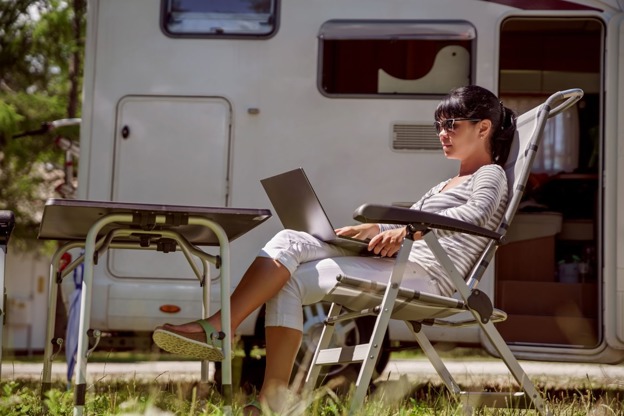
A mobile office is exactly what it sounds like: a workspace that allows you to complete your job from anywhere rather than being tied to a traditional building or home office. For many remote workers, this means creating a setup that includes the tools, equipment, and connectivity needed to stay productive while traveling.
One of the biggest advantages of using an RV as a workspace is flexibility. A variety of RV layouts can support a dedicated workspace, and many travelers have found unique ways to convert existing areas into functional work environments.
Common places to set up an RV workspace include:
-
A dinette table that doubles as a workstation during work hours
-
The main living area featuring a small desk and comfortable chair
-
A fold-down desk installed near windows for natural light
-
A reconfigured entertainment center that becomes a work station
-
Outdoor setups at a picnic table when the weather allows
Many RV travelers also add office elements that helps them work comfortably, such as:
-
A standing desk converter for better ergonomics
-
A high-performance office chair that supports long work sessions
-
A piano stand or portable desk frame for laptops and multiple monitors
-
Extra storage space or cabinet space for electronics and office supplies
Because RV layouts vary widely, the type of workspace available will depend on the type of RV you choose. Larger RVs, such as a class A motorhome or fifth wheel, often provide more room for a dedicated office space, while smaller rigs like a travel trailer or class B motorhome require more creativity in office design.
Regardless of the RV type, many travelers discover that working on the road simply requires thoughtful organization. With the right setup, even a compact camper can provide enough space to stay productive while avoiding being tied to a traditional office.
Creating a Productive RV Office
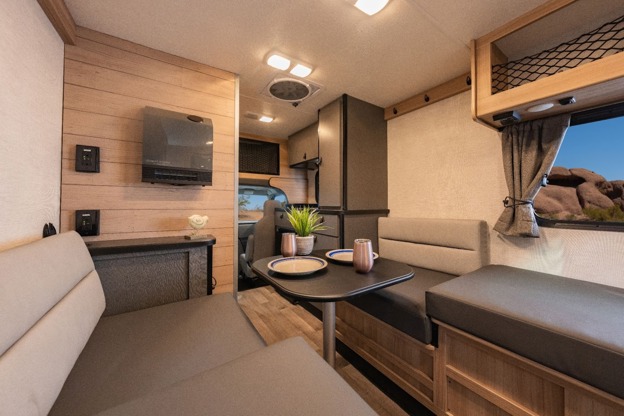
One of the advantages of working from an RV is that the interior can be adapted to support a comfortable and modern office. Even in a smaller square foot setting, many travelers find effective ways to build a workspace using areas that already exist in the RV’s layout.
Several common RV layouts work particularly well for creating a workspace.
Dinette Workstation
One of the easiest options is converting the dinette table or dining table into a daytime office. This area already provides seating, counter space, and a stable surface for a laptop or multiple monitors.
Because the dinette is typically located near windows, it often provides natural light and good airflow, which can make long work sessions more enjoyable.
Swivel Chair Workstation
Many larger RVs include captain’s chairs that rotate toward the living area. These swivel seats can become a simple but effective mobile office setup.
For example, some travelers place a small folding desk or piano stand in front of the chair to create a compact workstation. This setup works well for video calls, email, or project work without taking up permanent office space.
Entertainment Center Conversion
In some RVs, the entertainment center can be repurposed as a workspace. Removing the TV or using the cabinet area below it can create a dedicated workspace for a laptop and accessories.
This approach works particularly well in RVs that already have a large TV mounted elsewhere in the main living area.
Garage Office in a Toy Hauler
A toy hauler can provide one of the most flexible office layouts. The rear garage area is designed as an open space, which makes it easy to add a desk, office chair, and storage solutions.
Because this area is separated from the rest of the RV, it can also provide a quieter environment for meetings and focused work.
Compact Workstation in Smaller RVs
Even smaller rigs, like a travel trailer or class B motorhome, can support an on-the-go setup. In these cases, many travelers simply use the main living area to create a flexible workstation that can be packed away when needed.
Common solutions include:
-
A portable standing desk placed on a table or countertop
-
A folding desk that stores easily when not in use
-
A laptop setup at a picnic table outside when the weather is nice
No matter the RV size, the goal is to create an easy-to-use workspace that allows you to stay focused during the day. With a thoughtful layout and a few smart adjustments, many travelers discover that their RV can provide an office space no different than a brick-and-mortar building.
Using Your RV Workspace

Once you have chosen where your RV workspace will be located, the next step is knowing how to use it throughout the day.
One of the most important factors in a productive mobile office is lighting. Working in a dim area can quickly lead to fatigue, especially during long stretches of isolated, remote work. Many RV travelers position their desk or workstation near windows to take advantage of natural light during the day. When natural light is limited, adding a small desk lamp can help maintain a comfortable work environment.
Air circulation is another detail that often gets overlooked. When you're spending hours working inside an RV, good airflow can make a noticeable difference in comfort and concentration. Opening windows, using ceiling vents, or positioning your workspace near areas with better ventilation can help prevent your office area from feeling stale or stuffy.
Organization is equally important when using your four-wheeled office. Since RV interiors are compact, efficient storage solutions help prevent clutter and make it easier to stay focused.
Some practical storage ideas include:
-
Using built-in cabinet space to store electronics and office supplies
-
Adding small organizers to maximize available storage space
-
Keeping cables, chargers, and other cords neatly bundled or zip-tied together
For travelers who spend significant time on video calls, it can also help to consider the visual background. Positioning your workspace where there is good lighting behind your camera, along with a clean background, can make meetings look more professional.
Connectivity Tips for Working Remotely on the Road

Reliable internet is arguably the most important part of working remotely. While setting up a relaxing workspace is important, staying connected ensures you can complete tasks, attend video calls, and maintain normal work hours while traveling.
Unlike a traditional office, internet access on the road can vary depending on your location. Campgrounds, national parks, and rural destinations may not always offer strong signals. Because of this, many remote workers use a combination of connectivity tools to stay online while traveling in an RV.
Here are some of the most common internet solutions used by travelers with a mobile office setup.
Cellular Hotspots
A mobile hotspot connected to a cellular data plan is one of the most widely used solutions for remote work on the road. Many remote professionals rely on hotspot devices that connect laptops and other equipment directly to a cellular network.
Advantages include:
-
Reliable internet in many areas with cell coverage
-
Easy setup that works inside most campers and RVs
-
A portable connection that works both inside and outside the RV
Many travelers also carry hotspots from different carriers so they can search for the strongest signal depending on their location.
Satellite Internet
Satellite internet systems have become increasingly popular for people who spend extended time traveling or working in remote areas. These systems connect to satellites instead of cellular towers, allowing internet access in places where traditional networks may not reach.
For remote workers who plan to travel frequently, satellite internet can be a great option for maintaining consistent connectivity.
Campground WiFi
Many RV parks and campgrounds provide shared WiFi networks. While this can be convenient, performance often depends on how many people are using the network at the same time.
Campground WiFi may work well for basic tasks like email or light browsing, but remote workers who depend on stable internet for meetings and intensive tasks, this internet connection might not cut it.
Signal Boosters
Some RV travelers install cellular signal boosters to strengthen weak signals. These devices can improve internet performance when you're in areas with marginal coverage, making it easier to stay connected while traveling.
Planning Around Connectivity
Successful remote workers often plan their travel schedule around connectivity. For example:
-
Scheduling important meetings on days when strong internet is available
-
Choosing campgrounds known for reliable connectivity
-
Saving driving for designated travel days rather than workdays
With a little ahead-of-schedule planning, many remote professionals discover they can maintain stable internet and continue their business operations while enjoying the freedom of RV living.
Managing Remote Work While Traveling
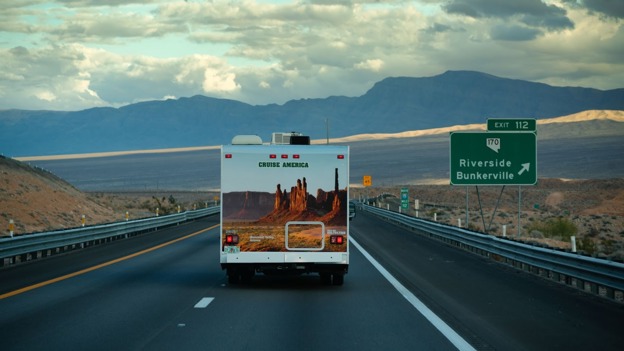
Working on the road requires a slightly different routine than working from a traditional office or home. While the freedom of RV living is appealing, maintaining productivity still requires structure and discipline. Many remote workers discover that establishing clear habits and boundaries helps them stay focused while enjoying the flexibility of travel.
One of the most helpful strategies is creating a consistent daily schedule. Even when on the road, setting defined work hours allows you to maintain a routine and avoid letting work spill into the rest of the day. Many people who are working remotely from an RV follow a simple rhythm: work in the morning, explore in the afternoon, and relax in the evening.
Some remote professionals organize their schedule around travel days and work days. For example:
-
Use certain days as dedicated travel days when driving between destinations
-
Reserve other days for focused work inside the RV workspace
-
Schedule meetings and video calls when you know you'll have reliable connectivity
This approach helps prevent disruptions and ensures you have the time needed to complete important tasks.
Another key to productivity is switching into work mode when the workday begins. In a traditional workplace, commuting naturally creates a separation between work and personal time. When working in an RV office, that boundary needs to be created intentionally.
For people balancing a business or remote job while traveling, the key is consistency. With thoughtful planning and a structured routine, many people discover they can maintain their workload during the week while still enjoying the adventure of life on the road.
Why RV Living Appeals to Digital Nomads

For many remote workers, the ability to travel while maintaining a steady job is one of the most appealing aspects of modern remote work. Instead of being tied to a single location, professionals can take their workspace with them and explore new places without interrupting their business or career.
This flexibility is one of the main reasons RV living has become increasingly popular among working-age RVers and digital nomads. By creating a mobile office, travelers can maintain a consistent workspace while experiencing different regions, landscapes, and communities throughout the year.
There are several reasons why this lifestyle continues to grow in popularity.
Freedom to travel without pausing your career
Traditional travel often requires people to take time off work. With an RV mobile office, many professionals can continue working remotely while still enjoying the experience of being on the road. Instead of waiting for vacation time, travelers can explore new destinations during evenings and weekends.
A consistent workspace wherever you go
Unlike working from hotels or coffee shops, an RV allows you to maintain the same workspace wherever you travel. Your desk, office supplies, and work setup remain in place, making it easier to maintain routines and stay focused throughout the week.
Opportunities to explore during the workweek
Many people who travel while working find they can structure their schedule to balance productivity and adventure. For example, mornings may be dedicated to work while afternoons are spent hiking, visiting local attractions, or exploring nearby towns.
A growing support network for traveling professionals
Communities have also emerged to support people who combine work with RV travel. Groups such as the Escapees RV Club and the Xscapers community help connect many RVers who work remotely. These communities offer events, online forums, and meetups where travelers can share tips, resources, and experiences.
For many digital nomads, this support network makes the lifestyle more sustainable and enjoyable over time.
As more professionals embrace location-independent careers, the concept of a mobile office continues to gain momentum. For people who want both stability and freedom, an RV can provide a practical way to combine work responsibilities with the excitement of travel.
How Much Office Space Do You Need in an RV?
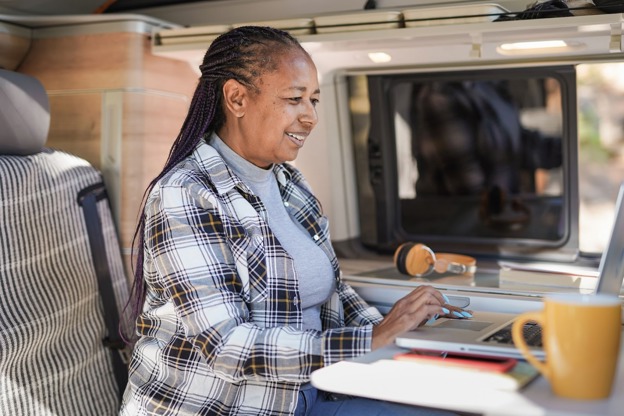
One of the most common questions people have when considering an RV as a mobile office is how much office space is actually needed to work comfortably. While larger RVs can provide more room, many travelers discover that a productive setup does not necessarily require a bigger area. With the right layout and organization, even a small space can function as the perfect office space.
Small RV Workspaces: Best for Minimalist Remote Workers
Travelers who rely primarily on a laptop and a few essential tools often find that smaller RVs provide everything they need. Professionals such as writers, marketers, consultants, and freelancers often only require a stable desk, reliable internet, and a comfortable chair to stay productive.
Smaller RV options like a class B motorhome, compact travel trailer, or small camper are often ideal for people who:
-
Work primarily on a laptop with minimal equipment
-
Prefer frequent travel and shorter travel days
-
Spend much of their time exploring outside the RV
-
Want a simple rv workspace that can be packed away easily
In these setups, a dinette table or dining table often becomes the primary workstation during work hours. Because these areas are typically located near windows, they provide natural light and an open feeling even within a small space.
For many travelers, this type of flexible workspace is more than enough to work comfortably while maintaining a highly mobile travel lifestyle.
Larger RV Workspaces: Ideal for Equipment and Dedicated Offices
Some professionals benefit from a more permanent workspace setup. Remote workers who rely on multiple devices, extended video calls, or specialized equipment often prefer larger RV layouts that allow for a dedicated workspace.
Larger rigs, such as a class A motorhome or fifth wheel, typically provide extra space that can support a more traditional office environment.
These setups often work best for people who:
-
Use multiple monitors or additional office equipment
-
Spend long hours working inside the RV
-
Run a remote business that requires frequent meetings
-
Prefer fewer travel days and longer stays at destinations
Larger RVs may include features that make creating a workspace easier, such as expanded floor plans with three slide-outs, larger main living areas, or additional counter space.
Some travelers even convert areas like the entertainment center or part of the living area into a permanent RV office with a desk, storage, and a comfortable chair.
Start Your Mobile Office RV Adventure with Cruise America
Curious about trying a mobile office RV setup? Renting a Cruise America RV is an easy way to test working remotely while traveling. You can create a comfortable RV workspace, maintain your work hours, and explore new destinations after the workday ends.
Browse RV rentals and start planning your work-from-anywhere adventure today.